JillLebofsky may earn a commission if you buy through links on this page, at no extra cost to you. That does not change what we report.
Part of our VitalFlow overview. Last checked November 17, 2026.
Does VitalFlow really work? Nobody can say yet, because no published study has tested the VitalFlow capsule itself. Its best-known ingredient has a weak record: a 2023 Cochrane review of 27 studies and 4,656 men found that saw palmetto alone "provides little to no benefits" for urinary symptoms from an enlarged prostate[4]. VitalFlow also uses less of it than most trials did, 200 mg of berries per serving on the label[2].
Does VitalFlow really work? The short answer
We can say what is on the label and what studies found for each ingredient at the doses they tested. We cannot say the capsule improves urine flow, night trips or prostate size, because no VitalFlow trial exists in the sources we checked on November 17, 2026.
The vendor's references page lists five items: a market report, a CDC page, a Harvard blog, a Michigan Medicine saw palmetto page and an NCBI paper on minerals in prostate cancer[3]. None of them is a study of VitalFlow. The sales page calls the formula "100% Effective" and says "tests have indicated" that results take 9 to 12 weeks, without naming a test[1].
The stronger ingredient signals come from pygeum and beta-sitosterol, both in small, short, older trials of standardized products[7][8]. VitalFlow lists pygeum bark 100 mg and plant sterols 300 mg but does not say how they were extracted or how much beta-sitosterol the sterols hold. Full label: VitalFlow ingredients.
Which evidence levels should you not confuse?
Only the last two of these four levels can show a product works. VitalFlow has the first two only.
Plausibility
A reason an ingredient might help, such as a lab or animal finding. Buchu sits here: a 2022 review found only lab work and traditional use[12]. Our evidence cards found no human trials for gravel root or calcium D-glucarate either.
Ingredient trials
Human studies of one ingredient at a set dose. Saw palmetto, pygeum, beta-sitosterol, stinging nettle root and pumpkin seed all have them, with mixed results. They apply to the dose and form tested, not to a different amount or plant part.
Finished-product trial
A study of VitalFlow itself, at 2 capsules a day, against a placebo. We found none, and the vendor cites none[3].
Replication
A second, independent trial that gets the same result. Saw palmetto had this, and the repeat trials were negative: the STEP trial (225 men, 320 mg a day for one year) and the CAMUS trial (369 men, up to 960 mg a day for 72 weeks) both found no benefit over placebo[5][6].
VitalFlow claims vs what the evidence supports
Each claim below comes from the vendor's sales page or FAQ, checked November 17, 2026[1]. The second column is the most a fair reader could take from the evidence; the third says why it stops there.
| Vendor claim | Reasonable reading | Limitation |
|---|---|---|
| "100% Effective" | No test is named | No published VitalFlow trial |
| Sleep "without having to use the bathroom once every hour" | Pygeum trials saw night trips fall 19% on average | Those used standardized extracts for about 64 days; VitalFlow names no extract[7] |
| Results in 9 to 12 weeks, per "tests" | Many ingredient trials ran 4 to 26 weeks | The vendor does not name the tests |
| Stinging nettle "root" | The label lists nettle leaf, 20 mg | The root trial used 450 mg a day[9] |
| FDA wording about its facility | The facility is not named | FDA does not approve supplements before sale[13] |
Which ingredients matter most?
Four ingredients carry most of the prostate research, and VitalFlow's version of each differs from what the trials used in dose, form or plant part. That gap is why ingredient studies cannot be read as VitalFlow results.
- Saw palmetto: 200 mg of berries with no extract standard on the label[2]. The CAMUS trial called 320 mg a day of extract the "standard dose"[5], so VitalFlow has about 62% of that weight, as raw berry rather than extract. Even at 320 to 960 mg of extract, CAMUS found no benefit.
- Pygeum: 100 mg of bark. Trials used 75 to 200 mg a day of standardized extract[7].
- Plant sterols: 300 mg, with no beta-sitosterol amount stated. Beta-sitosterol trials used 60 to 130 mg a day of beta-sitosterol and lowered the IPSS symptom scale (0 to 35) by 4.9 points versus placebo[8].
- Stinging nettle: 20 mg of leaf. The prostate trials tested root extract, for example 450 mg a day for 12 weeks[9].
Pumpkin seed is in the 142 mg blend at an undisclosed amount. In the largest pumpkin seed trial, the responder rate did not beat placebo in the main analysis[11].
What results are realistic to expect?
Only what the trials measured, over the time they ran. Nobody has measured VitalFlow, so these are ceilings for ingredients at study doses, not forecasts for the capsule.
- Pygeum, about 64 days on average: night trips down 19%, peak flow up 23%, and men about twice as likely to report overall improvement[7].
- Beta-sitosterol, 4 to 26 weeks: 4.9 points lower on the IPSS scale, with no change in prostate size[8].
- Saw palmetto, 3 to 6 months: 0.90 points lower on the same scale, which Cochrane calls little to no difference[4].
No ingredient trial showed a shrinking prostate. If you try the product, our how to take VitalFlow guide has a simple symptom log.
When should you see a doctor instead?
See a doctor before trying any prostate supplement if you have new urinary symptoms, because BPH symptoms "could be caused by other urinary problems," including infections, prostatitis and prostate cancer[10]. BPH affects 29% to 33% of men 65 and older, and medicines for it are well studied: alpha blockers, 5-alpha reductase inhibitors and PDE-5 inhibitors[10].
See a doctor right away if:
- you cannot urinate at all
- urination is urgent and painful, with fever and chills
- there is blood in your urine
- you have great pain in your lower belly[10]
Evidence conclusion
VitalFlow is an untested blend of mostly low-dose ingredients. A few of them have small positive trials at other doses and forms, and its main ingredient, saw palmetto, failed in large trials even at higher doses. Our method is on the how we check products page; the seller's record is on is VitalFlow legit.
| Decision question | Assessment, checked November 17, 2026 |
|---|---|
| Has VitalFlow been tested? | No published trial found |
| Is the main ingredient dosed like the trials? | No: 200 mg berry vs 320 mg extract |
| Does any ingredient have positive trials? | Pygeum and beta-sitosterol, small and short |
| Are all amounts disclosed? | No: 14 items share a 142 mg blend |
| Can you get money back if it does nothing? | Only within 60 days of shipping, all bottles returned at your cost |
Back to the VitalFlow overview.
Frequently asked questions
Is VitalFlow a device or a supplement?
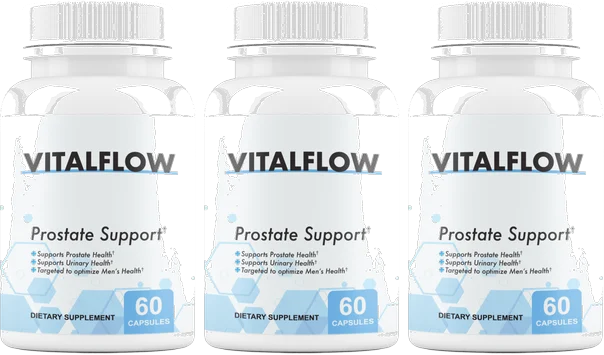
The VitalFlow covered here is a capsule supplement sold on vitalflow.net through BuyGoods, 60 capsules per bottle. We did not check any device or breathwork program that uses the same name, so nothing on this page applies to them.
How long does VitalFlow take to work?
The vendor says tests show 9 to 12 weeks but names no test. Ingredient trials ran about 4 to 26 weeks. The refund window closes 60 days after shipping, before the vendor's own 12-week mark, checked November 17, 2026.
Does saw palmetto shrink the prostate?
No. The STEP trial gave 225 men 320 mg a day of saw palmetto extract for a year and found no change in prostate size, symptoms, flow or PSA compared with placebo. VitalFlow's 200 mg of berries is a smaller dose.
Is there a VitalFlow clinical study?
We found none. The vendor's references page lists five items, including a market report, a CDC page and a Harvard blog, and none of them tests VitalFlow. Ingredient studies cannot stand in for a trial of the full capsule.
Can VitalFlow replace prostate medicine?
No. Do not stop or swap a prescribed medicine for any supplement. NIDDK lists alpha blockers and 5-alpha reductase inhibitors as standard BPH medicines. Talk to your doctor before adding VitalFlow to anything you take.
Sources
- VitalFlow sales page (text presentation). VitalFlow vendor, read November 17, 2026.
- VitalFlow Supplement Facts label (image). VitalFlow vendor, read November 17, 2026.
- VitalFlow references page. VitalFlow vendor, read November 17, 2026.
- Serenoa repens for lower urinary tract symptoms due to benign prostatic enlargement, Cochrane review 2023. PubMed, read November 17, 2026.
- Effect of increasing doses of saw palmetto extract on lower urinary tract symptoms (CAMUS), JAMA 2011. PubMed, read November 17, 2026.
- Saw palmetto for benign prostatic hyperplasia (STEP), NEJM 2006. PubMed, read November 17, 2026.
- Pygeum africanum for benign prostatic hyperplasia, Cochrane review 2002. PubMed, read November 17, 2026.
- Beta-sitosterols for benign prostatic hyperplasia, Cochrane review 2000. PubMed, read November 17, 2026.
- Stinging nettle root extract in men with BPH, randomized trial 2020. PubMed, read November 17, 2026.
- Enlarged Prostate (Benign Prostatic Hyperplasia). NIDDK, NIH, read November 17, 2026.
- Pumpkin seed in men with BPH, 12-month randomized trial (GRANU). PubMed, read November 17, 2026.
- Buchu (Agathosma betulina and A. crenulata), review 2022. PubMed, read November 17, 2026.
- Saw Palmetto: Usefulness and Safety. NCCIH, NIH, read November 17, 2026.
This page is general information, not medical advice. Dietary supplements are not reviewed by the FDA for safety or effectiveness before they are sold and are not intended to diagnose, treat, cure or prevent any disease. Talk to your doctor before taking any supplement, especially if you are pregnant, nursing, take medication or have a health condition.